 XP TRACKER
A daily creative habit for artists and creatives
Most creative work gets made in ordinary sessions, not in rare bursts of inspiration. A daily creative habit works best when the daily part is small, such as ten minutes of sketching or one rough verse, and the bigger work gets its own protected blocks each week.
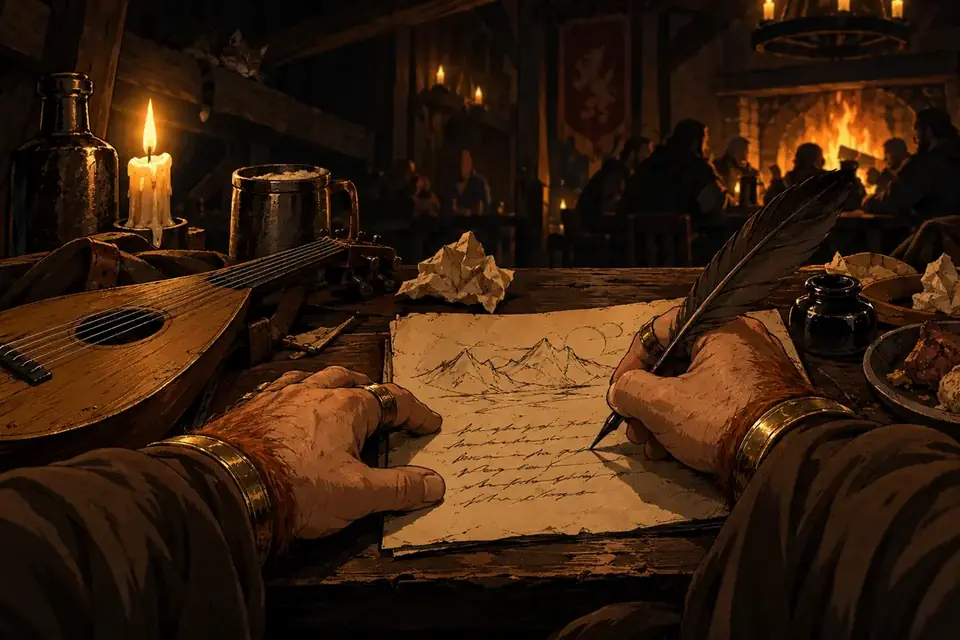
Why creative habits are hard to keep
Creative work doesn't come with a boss or a deadline unless you're paid for it. You can always do it later, and later turns into months. When you do sit down, the gap between the thing in your head and the thing on the page can feel so wide that you'd rather tidy the studio, buy new brushes or watch other people's process videos.
Energy matters too. Many artists and creatives also hold a day job, freelance on the side or care for someone. By evening, the part of your brain that makes things is tired. Inspiration shows up at odd times, often when you can't act on it, and the work you most want to make is the hardest to start.
A creative routine fixes the starting problem. It gives you a time, a place and a small enough task that showing up doesn't depend on mood.
The few habits that matter most here
- A small daily minimum. Smallest version: ten minutes of making something, or one finished small thing, such as a sketch, a photo or eight bars.
- A fixed time and place. Smallest version: the same chair, the same time of day, materials left out and ready so starting takes seconds.
- A practice space that can be bad. A cheap sketchbook, a scratch file, voice memos. Smallest version: one rule, written on the first page, that nothing in here has to be good.
- Weekly finishing time. Daily practice builds skill. Projects need longer blocks. Smallest version: one two-hour block a week for the main project, booked like an appointment.
- Collecting ideas. Smallest version: one note on your phone or a pocket notebook where every idea goes, so you can stop holding them in your head.
Julia Cameron's The Artist's Way (1992) made this kind of routine popular with its "morning pages", three handwritten pages each morning with no rules about quality. You don't need her whole programme to borrow the idea. If you play music, our page on practising an instrument has more on short daily practice.
A sample week for someone with a day job
Daily practice is small. Longer blocks happen twice a week. Swap in your own medium.
| Day | Daily minimum | Bigger work |
|---|---|---|
| Monday | 15 min sketchbook before work | None |
| Tuesday | 15 min sketchbook | None |
| Wednesday | 15 min sketchbook | 1 hour on the main project after dinner |
| Thursday | 10 min, a copy study of an artist you like | None |
| Friday | 10 min, or skip if the week was heavy | None |
| Saturday | Optional | 2 to 3 hours of finishing work |
| Sunday | Look back at the week's pages for 10 minutes | Visit a gallery, a gig or a library, or rest |
Some weeks the project block gets eaten by life. Keep the daily minimum and move the block, rather than cancelling it.
What you can drop for now
- Waiting for inspiration. Start with a prompt or a copy exercise and let ideas arrive while you work.
- Posting everything you make. Practice can stay private. Share finished pieces when you want to.
- Better gear first. Most new tools can wait until you've used the old ones every day for a month.
- Five projects at once. Pick one main project. New ideas go in the notebook, not on the schedule.

When it goes wrong
Creative blocks, a rejected piece or a busy month can stop you for weeks, and the longer the gap, the bigger the first session feels. Come back with the smallest version: five minutes, a scribble, one line. If you're stuck because nothing feels good enough, our page on habits for perfectionists may help, and how to stop overthinking and start has more tactics for the first ten minutes.
If you've drifted for a long time, our guide to getting back on track walks through a gentle restart.
Your first step today
Pick your daily minimum and your time. Then set out tomorrow's materials tonight: the sketchbook open on the table, the guitar on its stand, the document already open.
In XP Tracker, every class has a daily Record Thoughts quest for writing, and you can add Draw or paint, Practice an instrument with a timer, or Side project hour from the library. Each quest you finish earns XP and damages the current boss. Bards also get Create Something as a class quest. The Bard class.

Questions people ask
How do I make art every day?
Make the daily version small enough to do on a tired evening: ten minutes in a sketchbook, one photo, a four-bar idea, a paragraph. Do it at the same time and place, and keep longer project sessions for a few set blocks each week.
How long should a daily creative practice be?
Long enough to start, short enough to keep. Ten to thirty minutes a day is a common range for a practice habit. You can always continue past the minimum when it's going well.
What if I don't feel inspired?
Start anyway with a prompt or a copy exercise: draw what's on your desk, rewrite yesterday's lines, play scales. Many artists find that ideas show up after they start working, not before.
How do I finish creative projects instead of starting new ones?
Keep one main project at a time, set a weekly finishing block, and define 'done' before you start, for example 'three songs mixed' or 'twelve finished pages'. Park new ideas in a notebook for later.
Can I build a creative habit with a full-time job?
Yes, with small daily sessions and one or two longer blocks a week. Many people use the first 20 minutes of the morning or the commute for the daily part, and a weekend morning for deeper work.
Related pages

Start your journey
Pick a class, do the day's quests, and watch your hero level up with you.
Start free on iPhone and Android.
Scan to install Point your phone camera at the code. iPhone opens the App Store, Android opens Google Play.