 XP TRACKER
How to gamify your life
Games keep you coming back because they show progress, hand you a clear next step and make hard things feel worth doing. You can borrow all of that for your real days. Here is the method, step by step.
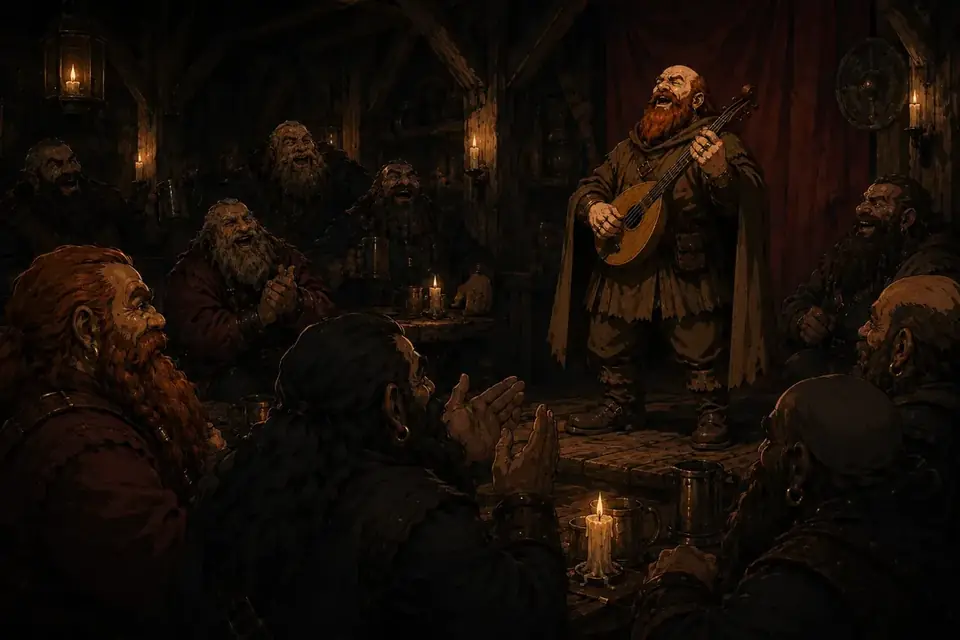
Why games work and habits don't
Think about the last game that ate a whole weekend. You always knew what to do next. Every small action gave you something back right away: a number went up, a bar filled, a door opened. Hard parts came at the right moment, after you'd had time to get stronger. And there was a story pulling you forward.
Now think about the last habit you tried to build. You probably picked something big ("work out more"), did it a few times, couldn't see any change, missed a day, and let it go. Nothing told you what to do on day six. Nothing showed you that ten workouts is ten more than zero.
Gamifying your life means giving your habits the parts that make games sticky:
- Quests: clear, small actions you can finish today.
- XP and levels: a visible record that your effort adds up.
- Bosses: short deadlines that ask for a burst of effort.
- Loot: rewards you actually want, earned on a schedule.
- A story: a reason bigger than the checklist.
You can build each piece with a notebook. The steps below show how.
Step 1: Turn goals into quests
A goal is a place you want to end up. A quest is something you can do today and tick off tonight. "Get fit" is a goal. "Train for 15 minutes" is a quest.
Good quests share three traits:
- You can finish them in one sitting. If a quest takes a week, split it.
- You know when they're done. "Read 10 pages" has an ending. "Read more" doesn't.
- They're small enough for a bad day. Size quests for your tired Tuesday, not your best Saturday. You can always do extra.
Start with three to five daily quests. Spread them across your life so one area doesn't hog the game. A simple split looks like this:
- Body: train for 15 minutes, or stretch for 3.
- Mind: 15 minutes of focused work on one task.
- Learning: read 10 pages.
- Calm: sit still and breathe for 3 minutes.
- Close: write one line about the day before bed.
Add one or two weekly quests for things that don't fit daily, like a deep clean or a call to someone you miss. If you want more ideas, our list of real-life daily quests has thirty, sorted by area.
Step 2: Give every quest XP
XP turns "I did some stuff" into a number you can watch grow. Keep the math dumb:
- Small daily quest: 10 XP.
- Hard daily quest (the one you avoid): 20 XP.
- Weekly quest: 50 XP.
Pay more for the quests you resist. If cold showers scare you and stretching doesn't, the shower should be worth more. Your XP table becomes a map of what costs you the most effort.
Write the XP next to each quest and add up the day's total every night. Takes ten seconds.
Step 3: Add levels
XP alone becomes noise after a few weeks. Levels give it shape. Set a level every few hundred XP and draw a bar in your notebook. Fill a square each night.
Make early levels quick and later levels slower. Level 2 should arrive within a few days so you feel the first win. Later levels can take a week or two. Real games work the same way: the curve gets steeper as you get stronger.
Give each level a small marker. A sticker, a line in a journal, a new playlist. The marker matters less than noticing it.
Step 4: Bring in a boss
Streaks fall apart because one missed day feels like losing everything. Bosses work better. A boss is a short challenge with a target and a deadline, for example: earn 200 XP in three days.
Bosses help in three ways:
- They give you a reason to push this week, not "someday".
- A loss is small and specific. You lost one fight, you didn't lose the habit.
- They let you choose difficulty. Pick an easy boss in a busy week and a hard one when you feel strong.
Name your boss. "The Procrastinator" or "Sunday Scaries" or whatever is actually in your way. Draw a health bar and cross off a chunk each time you finish a quest. It sounds silly until you're doing an extra set of push-ups to finish it off.
Step 5: Decide on loot before you need it
Rewards work best when you decide them in advance and tie them to effort, not to the calendar. Some rules that help:
- Small rewards often, bigger rewards rarely. A favourite coffee for a boss win. A new book at level 5.
- Pick rewards that don't undo the quest. A cheat day as a reward for healthy eating sends a mixed signal.
- Add some surprise. Write six small rewards, roll a die when you level up. Random loot is part of why games feel exciting.
Step 6: Write yourself a story
This is the part most people skip, and it's the part that keeps you going after the novelty fades. Ask yourself who you're becoming. Pick a character for it. A warrior who stops waiting for fear to go away. A monk who finds calm in the noise. A bard who makes things whether or not anyone is listening.
Write one paragraph about that character. When you don't feel like doing a quest, read it. You're not doing push-ups. You're training the character you want to be.
Pick mechanics that fit how you play
Not every game element works for every person. Think about the games you've loved and borrow from those:
- You love collecting? Make a collection. A sticker per finished book, a stamp for every boss you beat, a card for each new level.
- You love competing? Find one friend and compare weekly XP. Keep it light. The goal is to show up, not to win at all costs.
- You love a story? Put more time into Step 6. Write your character's next chapter at each level.
- You love grinding numbers? Track totals: pages read this year, minutes of focus, workouts done. Watching big numbers climb is its own reward.
- You love exploring? Rotate a few quests every month so the game keeps showing you something new.
Skip the mechanics that stress you. If streaks make you anxious, don't track them. If leaderboards make you feel behind, play alone. The game exists to help you, so you set the rules.
Step 7: Review every week
Once a week, look at your XP, your boss results and your quests. Write down three wins and one lesson. Then adjust:
- A quest you skipped every day? Make it smaller.
- A quest you finished without thinking? Make it a little harder, or drop its XP.
- Lost a boss? Ask what got in the way, not what's wrong with you.
The mistakes that end most life games
Too many quests on day one
Fifteen quests feels exciting on Sunday night and impossible by Wednesday. Start with five. The game should feel easy for the first week.
Spending more time on the system than the habits
Colour-coded spreadsheets and custom formulas are fun to build. They're also a way to feel productive without doing a single quest. If setup takes longer than an evening, simplify.
Punishing yourself for missed days
Losing points for a missed day sounds motivating. For most people it turns a bad day into a bad week. Missing a quest should cost you the XP you didn't earn, nothing more. Plan rest days on purpose. Our guide to getting back on track covers this in detail.
Rewards that come too late
"A holiday when I hit level 30" is too far away to pull you through a rainy Monday. Keep some rewards within a week's reach.
No ending
Games end. Habit systems usually don't, so they fade instead. Give yours a finish line: a season of twelve weeks, a final boss, a last level. When you reach it, you can start a new game with harder quests.
Paper, an app, or a game
You can run everything above in a notebook, and for some people that's the best option. If you'd rather not keep the score yourself, you have two kinds of apps to choose from.
Build-your-own tools like Habitica and LifeUp let you set every quest, reward and rule. Great if you love designing systems. The catch is that you're the game designer and the player, and the designer job never ends.
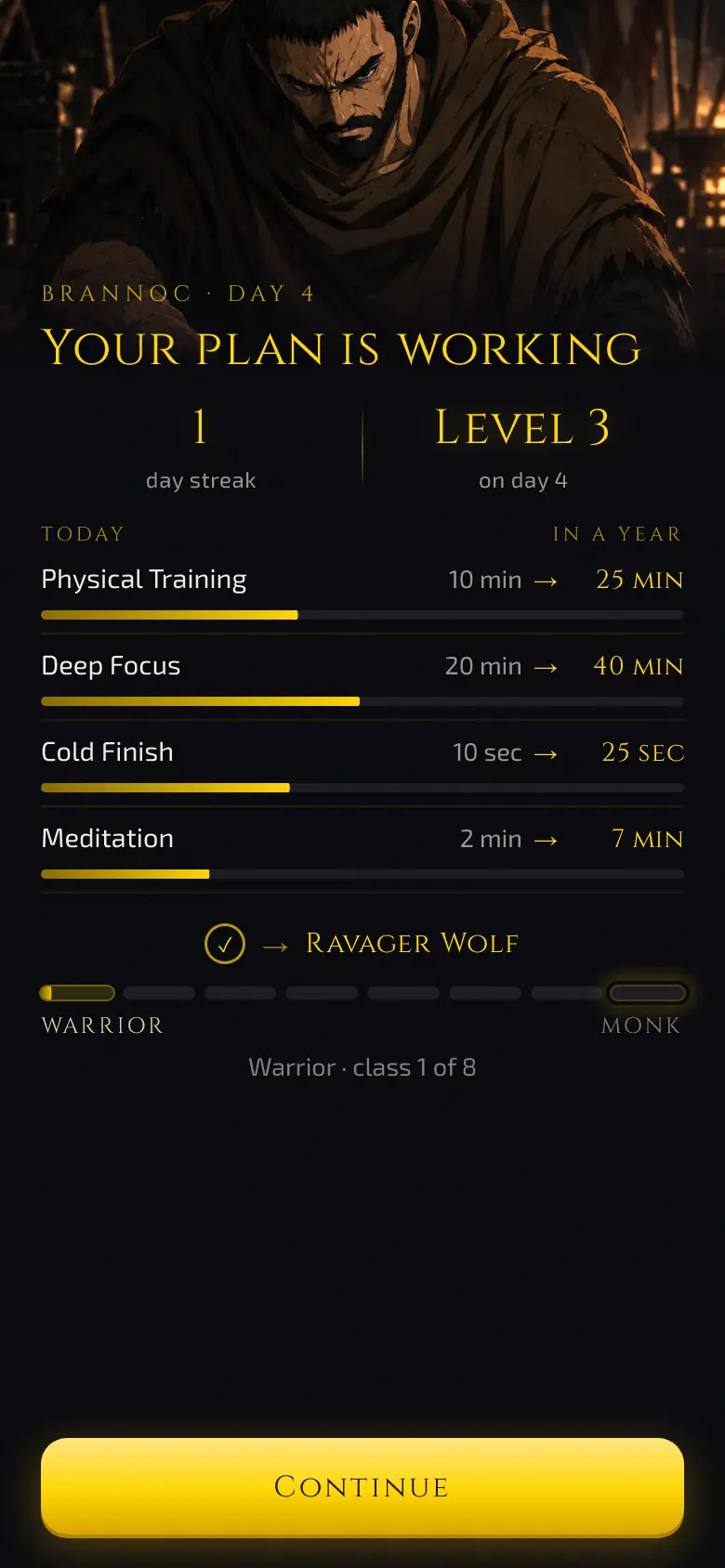
Habit RPGs with a program come with the game already built. XP Tracker is one of these. You pick one of eight classes, and the app gives you daily quests grounded in old, well-tested habits: training, focus, reading, stillness, closing the day. Each class adds four quests of its own. XP levels up your hero and unlocks the next panel of your class comic. Bosses show up every few days, and the XP from your quests is the damage. Gear and pet eggs drop as you level. When you finish all eight classes, the game ends and the last quest asks you to let the app go.
You can still add your own habits from a library of about 60 optional quests (up to 12 daily), like water, a step goal you pick, meds, language practice or no social media. See how XP Tracker works, or compare it with other options in our list of gamified habit apps.
Example quests from a real habit RPG
These quest cards come from XP Tracker. Use them as templates for your own game, on paper or anywhere else.



Your first week, in one list
- Write five small daily quests and one weekly quest.
- Give each one XP. Pay more for the hard ones.
- Draw a level bar. Set level 2 a few days away.
- Name a boss and give it a three-day XP target.
- Pick three small rewards and one bigger one.
- Write one paragraph about the character you're becoming.
- On day seven, review and adjust.
That's the whole game. Play it for a week and see what changes.
Questions people ask
Does gamifying your life work?
It works for a lot of people because it fixes the two things that sink most habits: you can't see your progress, and you don't know what to do next. Points, levels and quests solve both. It won't do the work for you, and it stops working if the game takes more effort than the habits.
How do I gamify my life for free?
Use paper. Write five daily quests, give each one XP, add up the points every night and draw a level bar. Set a weekly boss with an XP target. Pick a reward for each level. That covers the whole method.
What is the best app to gamify your life?
It depends on how you like to play. If you want to design every rule yourself, a build-your-own tool like Habitica or LifeUp fits. If you want a game that already has quests, bosses, a story and loot to collect, a habit RPG like XP Tracker fits. Our comparison of gamified habit apps goes through the options.
How many quests should I start with?
Three to five daily quests. Small ones. You can always add more in week two. Starting with fifteen is the most common way to quit by Thursday.
Is gamifying your life childish?
Points and levels are just feedback. Runners track splits, lifters log sets, and you can track quests. If the fantasy layer helps you show up, use it.
Related pages


Start your journey
Pick a class, do the day's quests, and watch your hero level up with you.
Start free on iPhone and Android.
Scan to install Point your phone camera at the code. iPhone opens the App Store, Android opens Google Play.