 XP TRACKER
How to start journaling
Most new journals die on page four, after three long entries and a busy week. Start with one sentence a night, written however it comes out, and let the entries grow once the habit holds.
Why it's harder than it sounds
Writing a few lines a day sounds like the easiest habit there is. Then you open the notebook and the blank page stares back. You don't know what to say, it feels a bit silly, and you close it again.
Three things usually get in the way:
- The blank page. "Write about your day" is too open. Without a question to answer, most people freeze.
- Trying to write well. You picture neat pages full of insight. Your first entry reads like a weather report, and you decide journaling isn't for you.
- Entries that are too long. A full page on day one is hard to repeat on a tired Thursday. Missing one long entry makes the next one feel heavier.
Start smaller than you think
Your starter habit is one sentence a night. One thought, one feeling, one thing that happened. Write it messy. Spelling and grammar don't count.
Hang it on something you already do at night, like brushing your teeth or plugging in your phone. Keep the notebook and pen on your pillow or next to your toothbrush, so you see them at the right moment. If you journal on your phone, put a notes widget on your home screen and open it before anything else.
On nights you have more to say, keep writing. On nights you don't, one line is a complete entry.
An example starter plan
Move to the next step only when the current one feels easy. A week of one-liners is a good week.
- Days 1 to 7: one sentenceSame cue every night. Date at the top, one line below. Close the notebook.
- Days 8 to 14: add one good thingUnder your sentence, write one specific thing you're grateful for today. Small is fine: hot coffee, a kind message.
- Days 15 to 21: try a promptPick one question for the week and answer it in two or three lines each night. Change the question next week if you like.
- Days 22 to 30: read it backAt the end of the month, read every entry in one sitting. Write down one pattern you notice. Then keep the nightly habit at the length that feels right for you.
Prompts for when you're stuck
- What took most of my energy today?
- What did I avoid, and why?
- One thing I'd do differently tomorrow.
- Something I noticed that I usually walk past.
- What's on my mind right now, in one line?
Keep a short list of prompts on the inside cover. On blank nights, pick the first one that catches you.
Common mistakes
- Buying the perfect notebook. An expensive journal can feel too nice to write badly in. A cheap one gives you permission.
- Writing for an audience. Nobody else needs to read it. Write the way you think.
- Only writing on bad days. Good days give you something to look back on, and make the patterns easier to spot.

What to do after a missed day
Write tonight's line as usual. You don't need to fill in the gap or explain where you were. If you want, write "missed two days, busy week" and carry on.
If the notebook has been closed for weeks, start again at one sentence a night, even if you'd built up to a page. Our guide to getting back on track covers restarts in more detail.
Check where the notebook lives. Journals that end up in a drawer or a bag stop getting written in. Put it back where your cue happens.
Record Thoughts as a quest in XP Tracker
In XP Tracker, Record Thoughts is one of the core daily quests every player has, in every class. The quest card asks you to open your journal or notes app and capture one raw data point: one thought, one feeling, one lesson or one observation, with no need for polish. You write wherever you like and mark the quest done. Gratitude, another core quest, asks you to name one thing you're grateful for right now.


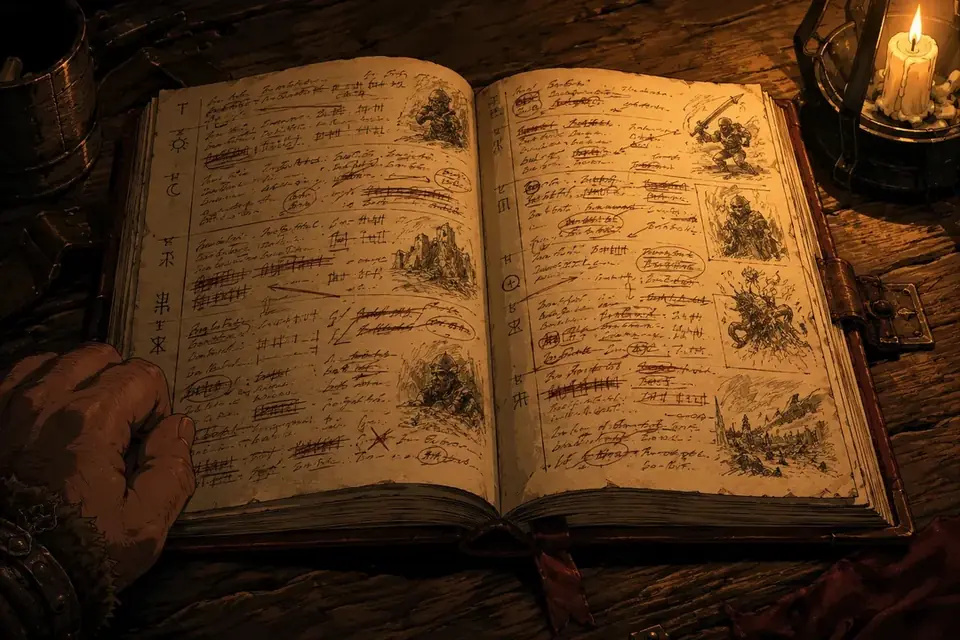
Each finished quest earns XP for your hero and damage on the current boss. The art on this page is the Bard version of the Weekly Review quest (three wins and one lesson each week) and the Shaman version of Gratitude. More ideas are in real-life daily quests, or meet the Shaman, the class about listening and finding the lesson in each day.
Questions people ask
What should I write in a journal as a beginner?
Start with one sentence about today: something that happened, how you felt, or one thing you noticed. If you're stuck, use a prompt like "What took most of my energy today?" or "One thing I'm grateful for is..."
Is it better to journal on paper or on my phone?
Use whichever you'll open every day. Paper keeps you away from notifications and feels more private to some people. A notes app is always in your pocket. You can switch later.
How long should I journal each day?
Two to five minutes is enough to build the habit. Some days you'll write a page because something is on your mind. Enjoy those days and go back to short entries after.
Morning or evening journaling?
Evening suits looking back on the day and putting it down before sleep. Morning suits clearing your head and setting a direction. Pick one and keep the same moment for a month.
What if journaling brings up hard feelings?
That can happen. Writing it down often helps you see it more clearly. If the same heavy feelings keep coming back or make daily life hard, talking to a doctor, a counsellor or someone you trust can help more than a notebook.
Related pages




Start your journey
Pick a class, do the day's quests, and watch your hero level up with you.
Start free on iPhone and Android.
Scan to install Point your phone camera at the code. iPhone opens the App Store, Android opens Google Play.